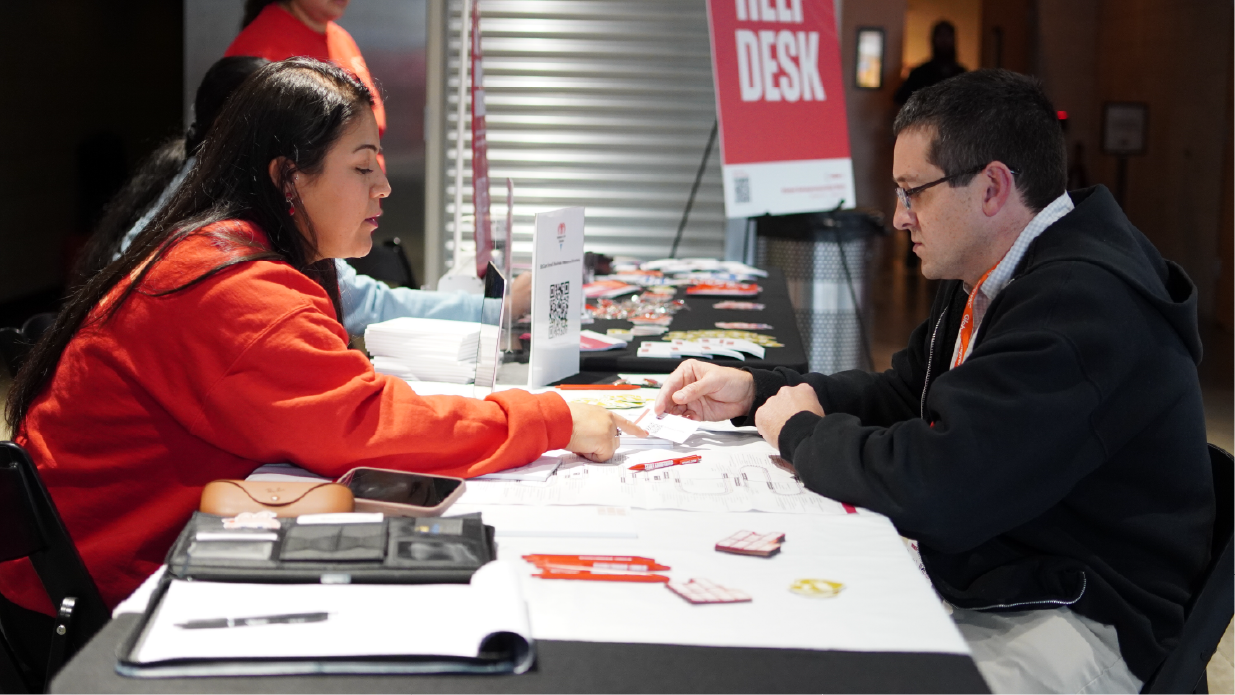
The words communities use to describe entrepreneurs now shape who participates, who gets support, and how local economies grow.
For a long time, economic development in the U.S. followed a familiar script: communities competed to attract large employers. Success was measured in metrics such as tax revenue increases, job growth, and square footage. Entrepreneurship existed in the background, rarely treated as the backbone of local economies.
That has changed. As I emphasized during our annual Global Entrepreneurship Week webinar, “entrepreneurship is the future of economic development.”
No longer a side conversation in economic development, entrepreneurship is the conversation. Not because it’s trendy or sounds good as part of a strategic plan. No, it’s because entrepreneurship is at the core of how communities actually grow when opportunity is distributed.
I’ve watched this shift happen in real time over the past two decades, most notably during and after the pandemic. What’s obvious is this: entrepreneurship is no longer just about startups. It’s about the people. And the words we use to describe those people matter more than most have been trained to think.
For years, many of us had the data to support entrepreneurship-led economic development. We knew almost all net new jobs came from young firms and existing scaling businesses, rather than from large corporations. Still, entrepreneurship was not really “the thing,” even when the business case was clear.
That changed during the COVID-19 pandemic when communities had a front-row seat to what happens when entrepreneurial-run companies took the major hit. When our favorite neighborhood restaurant closed. When childcare providers disappeared. And when the corner hardware store struggled to maintain inventory, or toilet paper. Essentially, when Main Streets went dark, entrepreneurship was no longer abstract. It was personal, with real consequences on people’s lives. Most importantly, it impacted the heartbeat of our communities themselves.
That moment forced a reckoning. Economic development stopped being a business case, but rather, an emotional and social one. Supporting entrepreneurs wasn’t a “nice to have” feature, it had become a core necessity. We found ways at the federal and local levels to give literal gifts of money to our local stores to help them stay afloat.
That’s when many communities finally started saying the quiet part out loud, that entrepreneurship is legitimate and necessary economic development. It is about community continuity. Frankly, it is the future of how successful economic development will be done.
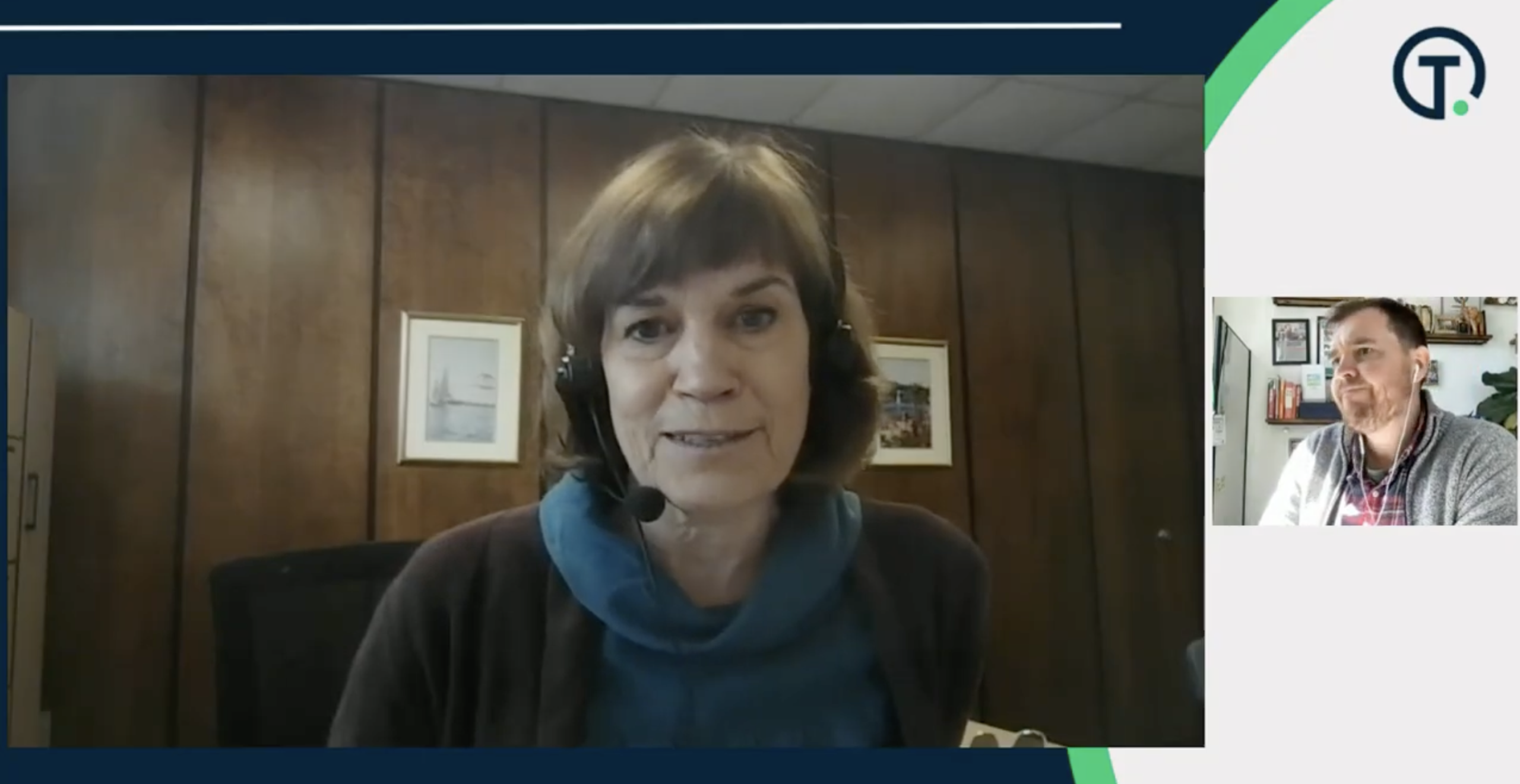
In an October 2025 Builders Live podcast, Maria Meyers, executive director of the UMKC Innovation Center and founder of SourceLink, talked with host Chris Wink about terms that tend to be used interchangeably but really have different meanings and connotations. Entrepreneurs, founders, operators, owners, and independent business owners are just a few of them. Sometimes economic development professionals and ecosystem builders argue about which one is “right.”
The distinctions didn’t come out of thin air. They reflect how entrepreneurship itself has evolved and how people see themselves inside it.
When Maria and the early team launched SourceLink in the 2000s, the language gap was wide.
“There was a big difference between being an entrepreneur and being an independent business owner,” she shared. “So much so, that we had to use both terms all the time.”
Back then, an independent business owner was often viewed as someone who planned to “be small and stay small,” while an entrepreneur was seen as someone who would “get something started and… sell it right away and get on to the next thing. I think both sets of values were a little bit different, so they had different names for each other.”
That distinction influenced everything, including who showed up to programs, how resources were designed, and who felt like they belonged.
Fast forward to today, and those lines have blurred even more. As Maria now says, the word ‘entrepreneur’ has, “become sort of a badge of courage.”
To her point, the word “entrepreneur” is no longer reserved for tech startups or venture-backed founders. We’re hearing people who are running bakeries or even lawnmowing businesses refer to themselves as entrepreneurs.
That shift matters a whole lot. It means that the word entrepreneurship itself has become a mindset. One of the biggest changes I’ve seen is that entrepreneurship is now less about what you are building, rather than by the way you think about the business development journey.
Maria captured this perfectly when she said, “It's a way of thinking. It's a way of considering problems and obstacles that sit in front of you and finding interesting ways to get around them and then making decisions on whether the path you're taking is the right path to get you to where you want to be. So, entrepreneurship is really a part of your own thinking, not so much just starting businesses.”
That mindset is showing up everywhere these days. In side hustles. In second-stage companies. In rural communities. Even inside corporations and institutions that don’t traditionally think of themselves as entrepreneurial at all. Heck, many corporations are trying to figure out how to embed “entrepreneurs” and “innovation teams” into their staff, R&D groups, some have even built private acceleration programs, and more.
For ecosystem builders, this is encouraging news. When people see themselves as entrepreneurs, they’re more likely to ask for help, connect with others, and stick with it when things get tough.
But mindset alone only gets you so far, however. Ecosystems still need structure. As ecosystem builders and economic developers, we must understand nuances within “entrepreneurship” so we can design programs and offer resources that meet people where they’re at, in terms of their mindset, stage of business, and type of business. It’s a big part of why we created the first international credential in this space, in partnership with the International Economic Development Council, to help teach people how to better identify and support innovators at every step of their journey.
Even as the word “entrepreneur” has broadened, effective ecosystem building still depends on specificity.
Over time, we learned that entrepreneurs aren’t one group with one set of needs. Maria notes that “every entrepreneur uses different resources, and we found that resources clustered around the type of entrepreneur that you [an ecosystem] have.”
That’s why many ecosystems now think in terms of categories of entrepreneurs. The distinctions are meant to serve people better, not to label them.
- Main Street entrepreneurs anchor community life and local identity, often sponsoring youth teams and local events.
- Microenterprises are often solo or home-based by design, usually with a desire to stay small.
- Innovation-led firms make up only about 1% of business, but they are related to innovation and using that to grow the company rapidly.
- Second-stage companies tend to be focused on systems, growth, and scale.
Subdividing entrepreneurship allows ecosystem builders to design resources that actually fit. When ecosystems are able to do that, resources stop being one-size-fits-all and start being relevant and useful. As Meyers notes, “Every one of these different types of business can be funded differently.” They also have different needs for technical assistance and peer network learning, for example.
This is where terminology really earns its keep. You can build the best resource hub front door in the world, but if people don’t recognize you’re talking to them, they won’t turn the doorknob to enter.
For example, I’ve heard founders say they avoid programs labeled “small business” because it feels limiting, implying that they will never be a “big business”. That’s not ego. It’s identity, and it differs among individual founders.
For us as community builders, especially those designing programs or marketing campaigns, language is an essential part of the strategy. At the end of the day, this comes down to empathy and clarity. Our job, as ecosystem developers, is to use language intentionally, design resources thoughtfully, and speak in ways that make entrepreneurs say, “this is for me.” Mislabeling is not a semantic error; it’s a participation barrier, and one that we should be constantly guarding against.
Last, one of the most encouraging shifts I’ve seen is institutional. Not that long ago, ecosystem building itself was treated as fringe. That resistance has eroded. Today, entrepreneurship sits alongside business attraction as a recognized development strategy. Public, private, and nonprofit institutions are now taking entrepreneurial ecosystems seriously as economic infrastructure.
That change hasn’t come just from the numbers, but from the forging of a shared way of talking about the work and the people that ecosystems are meant to serve. The shift isn’t complete. As developers, especially those who may be newer to our field, we are entering at a moment when entrepreneurship is no longer something you have to justify, but rather, something we have to do well.
If we want stronger ecosystems, we have to pay attention not just to capital, programs, and physical assets like co-working spaces but also our language. When entrepreneurs recognize themselves in the language you use, they’re far more likely to recognize your ecosystem as a place where they belong.