Collaborative or shared client relationship management (CRM) software must anchor ecosystem building in shared truth. They turn scattered records into usable intelligence. They cut friction for business owners, reveal progress across resource partners, and let funders see what their dollars actually do. Data, trust, and infrastructure are not side issues anymore; they are the key tenants that decide whether an ecosystem grows or stalls.
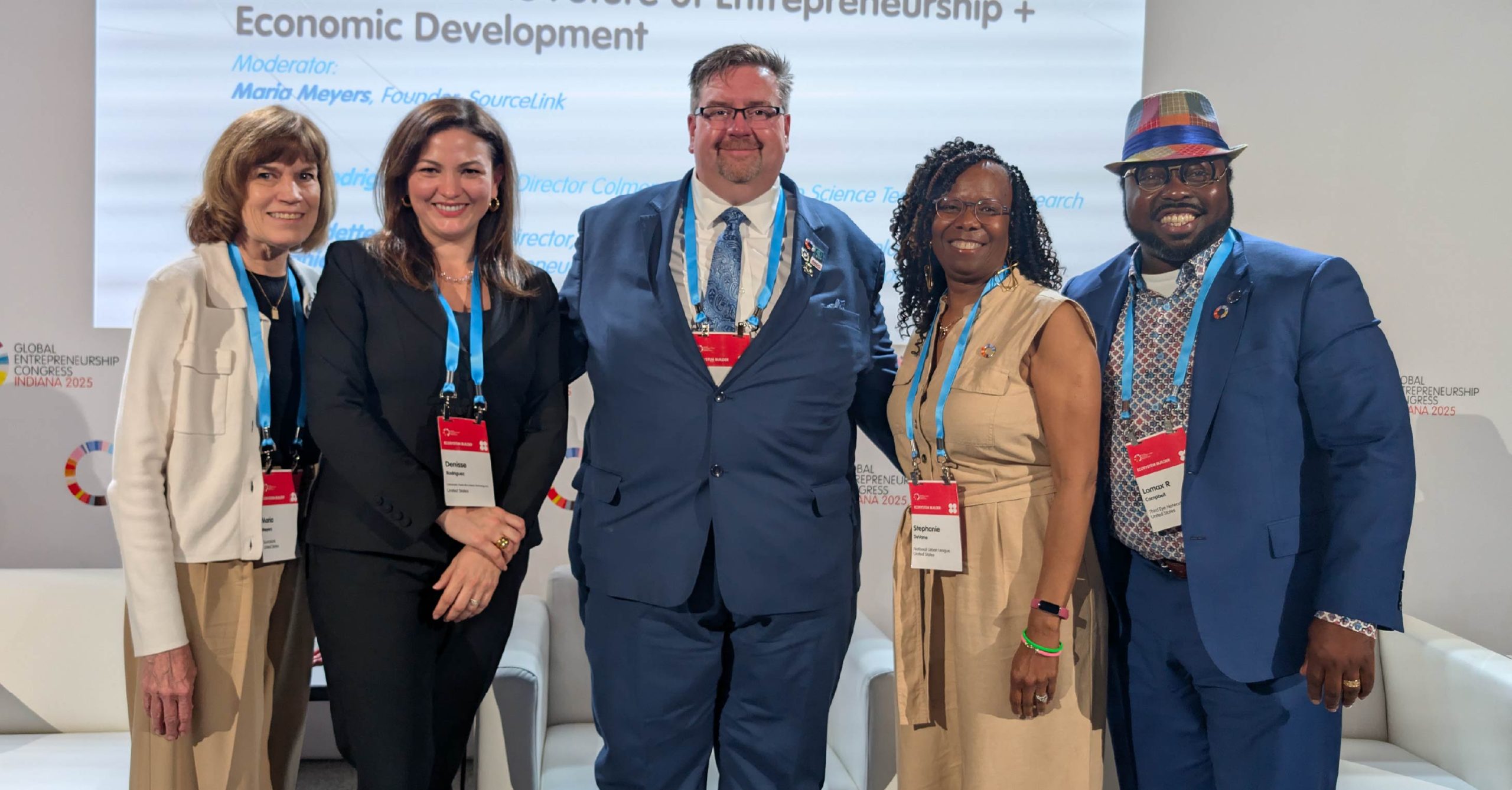
Dr. Lomax Campbell has been saying this plainly. As the architect behind Third Eye Network’s rapid growth and a trusted advisor to cities like New Haven, Connecticut, and Rochester, New York, he is not theorizing. He is building structures that change how communities back their entrepreneurs. At the center is a shared, network level customer relationship management system. One system that replaces one off spreadsheets, incompatible databases, and repeated intake requests with a connected platform the whole network can use and benefit from. We are not talking about some made up ecosystem relationship management solution, but rather, tangible people, process, and connecting technology at its best play.
In a recent interview with our SourceLink team, Lomax shared some transformational lessons learned and insights about how to approach building common infrastructure at scale for community impact which we've summarized below.
Break the silos, serve the founder
Most CRMs are built for a single organization. The collaborative model is different. Multiple organizations work in the same secure environment. Milestones are tagged. Interactions are logged. Documents live in one place. Referrals are visible and trackable across the network and inside each organization. You can see what happened, when it happened, and who helped make it happen.
Lomax's point is simple. A shared CRM lets partners exchange timely information about clients inside one platform. It supports clean handoffs, prevents double work, and allows the network to report on collective impact. That turns activity into outcomes you can prove.
Picture an entrepreneur moving from idea to launch. An entrepreneur support organization helps stress test the concept, then flags in the system that the business is ready for market validation. A second provider helps shape the revenue model and records that milestone. A third guides the founder to choose a legal structure, whether LLC, S corp, C corp, or nonprofit, and marks readiness for incorporation. Each step is visible. Nothing gets lost in translation, nothing tracked in an isolated system.
Now look at the founder experience. Right now, in far too many places, an entrepreneur tells their story again and again. They refill intake forms. They chase the same lease agreement. They upload the same financials. They are passed through entrepreneurship support organization referral chains without accountability or care. Lomax describes a familiar failure. You refer a founder from an incubator to a CDFI. The lender has no documented history of the prior six months of work and no access to critical files. The founder starts over. That is wasted time and energy during the most fragile phases when an entrepreneur is striving to start or grow their business.
In a shared system, the founder grants access once. Partners pull what they need. The network stops asking for the same documents. Progress accelerates. Burnout eases.
Lower cost, higher standards, improved impact
A shared platform lowers total cost for the region and raises consistency. Funders see this right away. If one group uses Salesforce, another relies on Neoserra, another uses SourceLink, another lives in Dynamics or even in a spreadsheet, measurement fragments. Definitions drift. Fields do not match. Roll ups become guesswork. Collective impact? You're kidding, right?
Operate in one environment and results standardize. Dollars secured by grants or loans. Certifications earned, such as MBE or WBE. Jobs created and retained. These outcomes become comparable across providers and over time. Reporting improves. Investment decisions get clearer. You can point to the work and say, this is why we backed them at these levels, and here is what happened next.
Governance, security, and the rules that make it sing
Technology is necessary. It is not sufficient. Rules, trust, policies, and relationships make the music. Concerns about data security deserve daylight. Lift them up. Address them head on. The question is operational. Who has access? What is shared? How is consent captured? How are permissions managed?
Here is one of my many favorite quotes from Lomax on this topic, "If we could figure out how to do sensitive health data sharing like with CAT scans, why can't we do it with an entrepreneur's business plan?" The answer is clear: we can, and we should. Our work together has demonstrated that ecosystems can adopt a similar discipline for business information with the right safeguards, protocols, training, and technology.
Lomax understands that funding alignment matters as much (or more) as technical design. In New Haven, funders now require applicants to participate in the shared network. You collaborate, you submit joint applications, you share data, or you do not qualify. That clarity changes behavior. The Community Foundation for Greater New Haven is working to raise a significant fund to sustain the effort, and the state watched closely. After a year of seeing the work firsthand, Connecticut issued a request for proposals to replicate the model in Hartford. That is what alignment looks like when dollars follow well governed data.
Right size the map
Geographic scope can decide what is possible. Lomax recommends matching the footprint of the CRM to how people actually live and do business, the functional economy. For some places, the right unit is a city and its surrounding communities. For smaller states, the state level can work. Massive states should consider metro regions.
Federal designations can guide design. Lomax cites the EDA Tech Hub designation which brought Rochester, Buffalo, and Syracuse communities together as an example of this. A shared system across that corridor may make a lot of sense because markets, missions, and funding lines were already connected by the EDA opportunity and others.
Culture before tools <- seriously, read this again
Many ecosystems already share clients and referrals informally. They would benefit immediately from a shared platform because the work is happening, only harder than it needs to be. Tools like SourceLink Enterprise succeed only when the culture is ready. Trust, reciprocity, and a habit of collaboration have to be present.
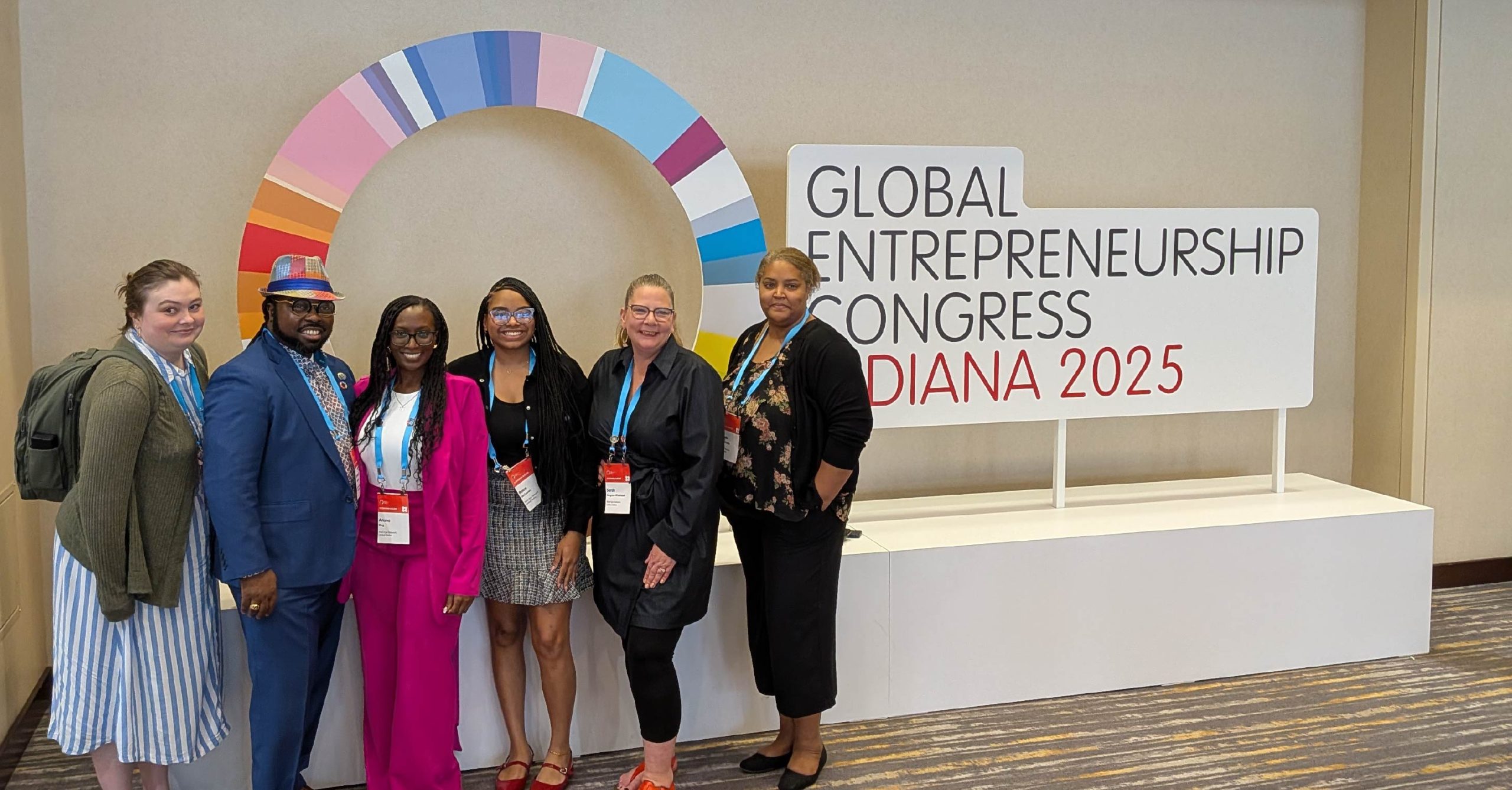
Lomax saw this at the Global Entrepreneurship Congress (GEC) in Indianapolis (his beautiful team is pictured above), where entrepreneurs, investors, policymakers, and ecosystem builders met to trade what works. In a podcast conversation we recorded together there, he pointed to professionalization as the next step. Shared CRMs are not just software. They are a marker that this field is maturing into a disciplined practice.
Honor scale diversity
Not every business is chasing rapid national expansion. Many want to root deeply in place, create stable jobs, and solve local problems. This is a key theme in Lomax's work, the idea that not every business is trying to become the next fast-growth wonder, what he calls "scale diversity". Many want to stay embedded in their communities, creating stable jobs and solving local problems. Research by Dr. Suntae Kim helps explain why scaling deep rather than scaling up matters. Incubators that focus on Main Street companies often produce firms that keep people, keep purpose, and keep neighborhoods strong years later, while often high growth firms relocate for capital or talent. Ecosystem builders should match services to founder intent. A collaborative CRM helps by tracking milestones that fit both venture backed startups and community anchored firms. One system, many pathways, clear outcomes.
How to build the network
Lomax's methodology follows a repeatable path. The hub organization gets very clear on a specific small business problem it will convene partners to solve. Specificity is the point. Name the outcome. Name the measures. Name the partners required to deliver. Build the evidence base that proves the work is meaningful. Convene. Draft an opportunity statement together. Align incentives. Only then lock in the infrastructure. Choose the platform. Establish governance and security. Secure the funding to operate and improve.
Do not neglect what Lomax describes as social infrastructure. People make collaboration possible. Standards and workflows matter, and so do relationships. As Lomax puts it best, “You can’t have collaboration without intentional socialization.” Create the spaces where partners show up as people, not just logos. That is how trust compounds.
Shift the culture
Lomax believes that a shared CRM can force an important choice. Competition for the same dollars, or coordination for shared outcomes. You cannot have both and call it collaboration. Shared systems require shared incentives. Align funding with the behaviors you need. Design governance that reflects the region’s values. Keep the founder at the center and let that be the test for every decision. One thing I would add on to Lomax's thoughts here is that a shared system can provide new emergent options for communities to unlock: the opportunity for new and expanded funding through collective impact reporting- but I'll save this for a future blog.
All the same, these results speak to people who care about progress. Connecticut moved to replicate what it saw in New Haven. Other cities, from Montgomery to Kansas City, are exploring similar strategies with Lomax. Professional convenings keep the momentum by surfacing playbooks and pressure testing ideas in the open. As more regions adopt shared CRMs, the practice will feel less novel and more necessary. Not because it is fashionable. Because it solves real, visible problems for the three core stakeholders who need each other to win: the entrepreneurs, the resource partners, and the funders.
A connected ecosystem starts with shared understanding
Cities that want to deepen support for entrepreneurs need a common map, a common language, and a common record. A collaborative CRM provides that base. It makes collaboration easier, progress more visible, and outcomes more measurable.
SourceLink Enterprise exists to help you build that base business ecosystem with integrity and speed. If you want to see how a shared system could work across your community, reach out to Krista Markley. To learn more about Lomax and his team's impressive work, check out Third Eye Network.
If you are interested in this topic, Lomax, Joe Williams, and I will be exploring this in even greater depth at the IEDC Annual Conference in Detroit and warmly welcome you to join us.